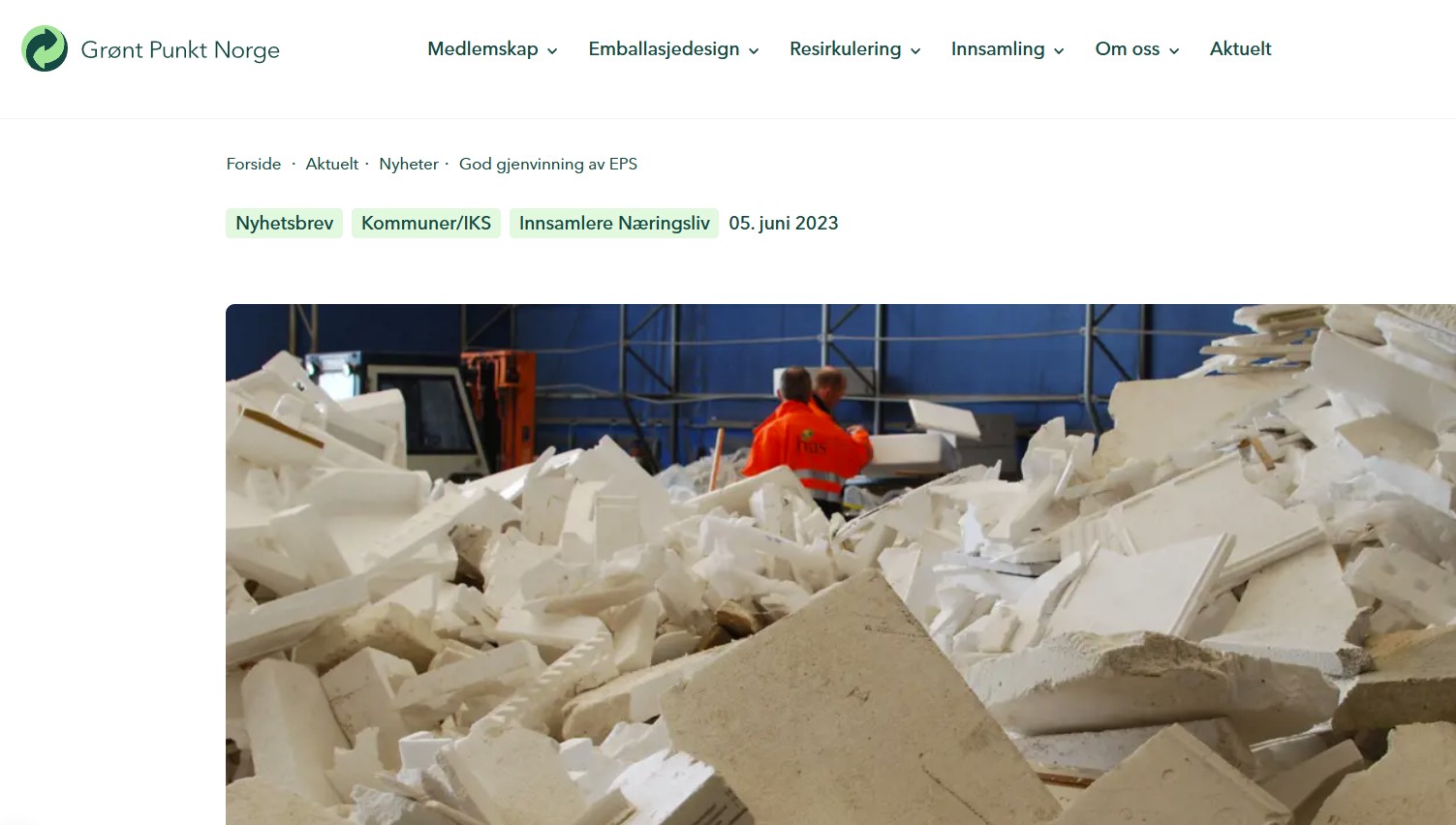
Despite EPS’s light weight and high volume posing logistical challenges, Norway’s Plastretur system achieved strong outcomes in 2022—collecting 6 159 tonnes of EPS and reaching a material recycling rate of 80.5%. This sustained performance follows a record year in 2021, when 6 412 tonnes were recycled at 87.4% efficiency (Grønt Punkt Norge).
Year-on-Year Trends
From 2018 to 2022, Norway’s EPS recycling rate climbed steadily—from 70% in 2018, to nearly 88% in 2021, before a slight drop in 2022. In 2020, recycling stood at 71.9% and in 2019 at 76% (Grønt Punkt Norge). While logistical limitations contribute to variability, focused support has proven effective.
Infrastructure & Incentive Strategy
EPS is notably voluminous and lightweight, making densification essential before transport. Plastretur has responded by funding new presses and maintenance of existing ones among municipal and industrial collectors (Grønt Punkt Norge). These investments reduce handling costs and facilitate clearer adoption of recycling streams.
The dip in 2022 triggered an enhanced support strategy: increased financial incentives per tonne of EPS delivered. Early 2023 data shows collection volumes rising again, suggesting the strategy successfully reinforces participation against system fatigue .
System Mechanics
Under the Plastretur scheme led by Grønt Punkt Norge, companies pay for packaging waste management. Collectors receive support per tonne delivered to material recycling, contingent on densification or compression. This has helped standardize practices across municipalities, IKS companies, and commercial collectors.
Strategic Significance
Maintaining high recovery rates over time requires more than a single-year initiative. The Norwegian model demonstrates the importance of sustained infrastructure investment, data-driven adjustment, and incentives. At 80.5%, recycling remains near record levels, with early indicators showing resilience and rebound—a model for adaptive circular systems.
EPS’s recyclability relies on maintaining value through equipment and economics. Plastretur’s oversight and strategic reinforcement lead to traceable volumes and quality outcomes—critical for building confidence in lightweight packaging recovery.
Conclusion
Norway’s 2022 EPS recycling performance highlights an adaptive circular framework: collection targets, infrastructure support, and responsive incentives. As collection indicators point upward in 2023, the case reinforces that consistent system stewardship—not just pilot bursts—is essential to sustaining high-material recycling rates for EPS.
Source: “God gjenvinning av EPS,” Grønt Punkt Norge, 5 June 2023 — Grønt Punkt Norge (Grønt Punkt Norge)