Expanded polystyrene (EPS) is a foundational material in protective packaging, relied upon across Europe to safeguard goods from damage during transport, handling, and delivery. Its unique combination of low density, shock absorption, and custom formability allows it to protect a wide range of goods in transit, from medical devices and diagnostic instruments to televisions and household appliances.
EPS is a functional component of logistics systems, enabling products to move securely through supply chains while maintaining quality, compliance, and consumer trust. By preventing loss and breakage, EPS helps minimize the environmental and economic costs of returned, discarded, or compromised goods—a function often underestimated but vital to supply chain efficiency.
Engineered protection for high-value goods
EPS absorbs impact and distributes load during transport, shielding fragile contents from shock, vibration, and stacking pressure. It can be tuned to manage both static and dynamic forces, supporting consistent performance whether goods are moved by air, sea, road, or courier. This is particularly critical for products sensitive to mechanical disturbance, such as white goods with integrated electronics, lab equipment, or consumer electronics.
Lightweight efficiency in logistics
With typical densities between 15 and 40 kg/m³, EPS delivers structural protection with minimal material mass. This reduces fuel consumption in transport, supports compliance with shipping weight limits, and simplifies manual handling—particularly important in decentralized delivery systems and e-commerce logistics.
Precision fit and streamlined packaging systems
EPS is molded to the geometry of the products it protects, ensuring secure placement and eliminating the need for secondary void fill. By preventing internal movement, it reduces the risk of damage during handling and delivery. This custom fit also improves packing density and pallet stability, enhancing efficiency in both storage and transit.
Supporting circular systems where infrastructure exists
While protective EPS is often used once in consumer-facing delivery, recovery systems are expanding in industrial and commercial supply chains. Clean, post-use EPS can be compacted and reprocessed into new technical components, insulation products, or secondary packaging — contributing to circular economy targets where collection and processing infrastructure is in place.
Preventing damage is a form of prevention
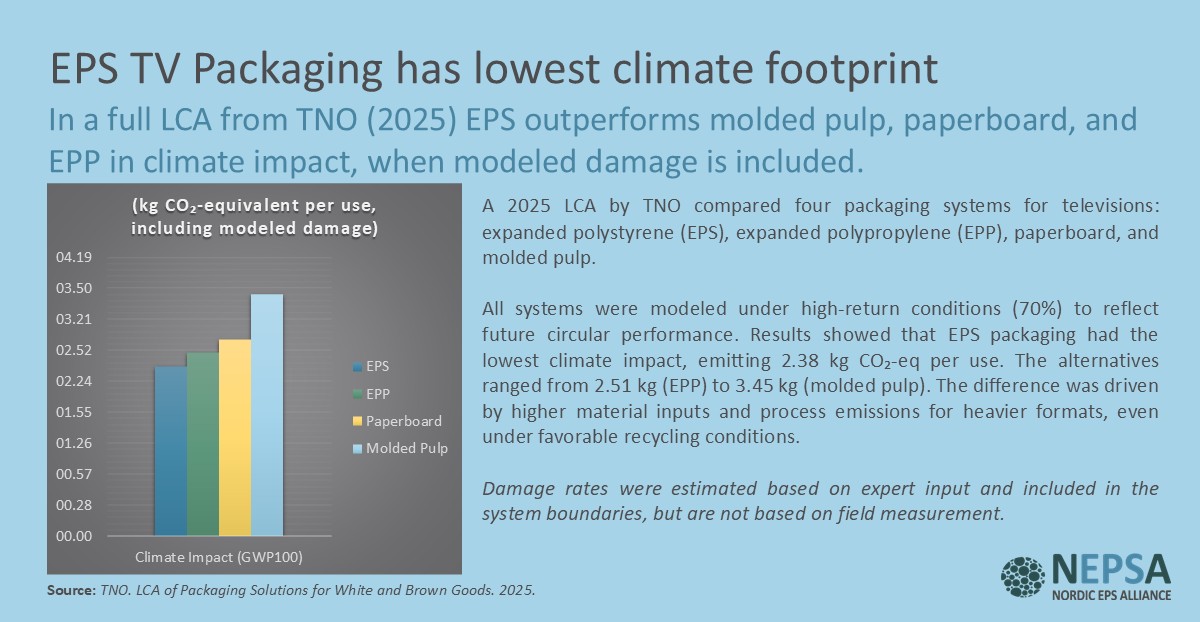
Across modern supply systems, even a small increase in product damage can outweigh the environmental footprint of the packaging itself. EPS protects not only the item but also the resources embedded in its manufacture, distribution, and use. In that role, packaging is not an accessory—it is an enabler of resilience, trust, and sustainability in global logistics.
A material that protects what matters
From electronics and diagnostics to white goods and engineered assemblies, EPS protects high-value goods through every stage of distribution. By reducing breakage, loss, and reverse logistics, it helps ensure that products — and the resources invested in them — reach their destination intact. In global supply systems, EPS safeguards quality and reduces avoidable waste, performing quietly but dependably where protection matters most.