Fire engineering depends on codes, tests, models, research and professional experience. Each provides essential evidence. None removes the need for judgement.
In the third article in his Beyond Fast and Easy Answers series, NEPSA Director Chresten Heide-Anderson examines how the framing of a technical question can influence the answer that follows.
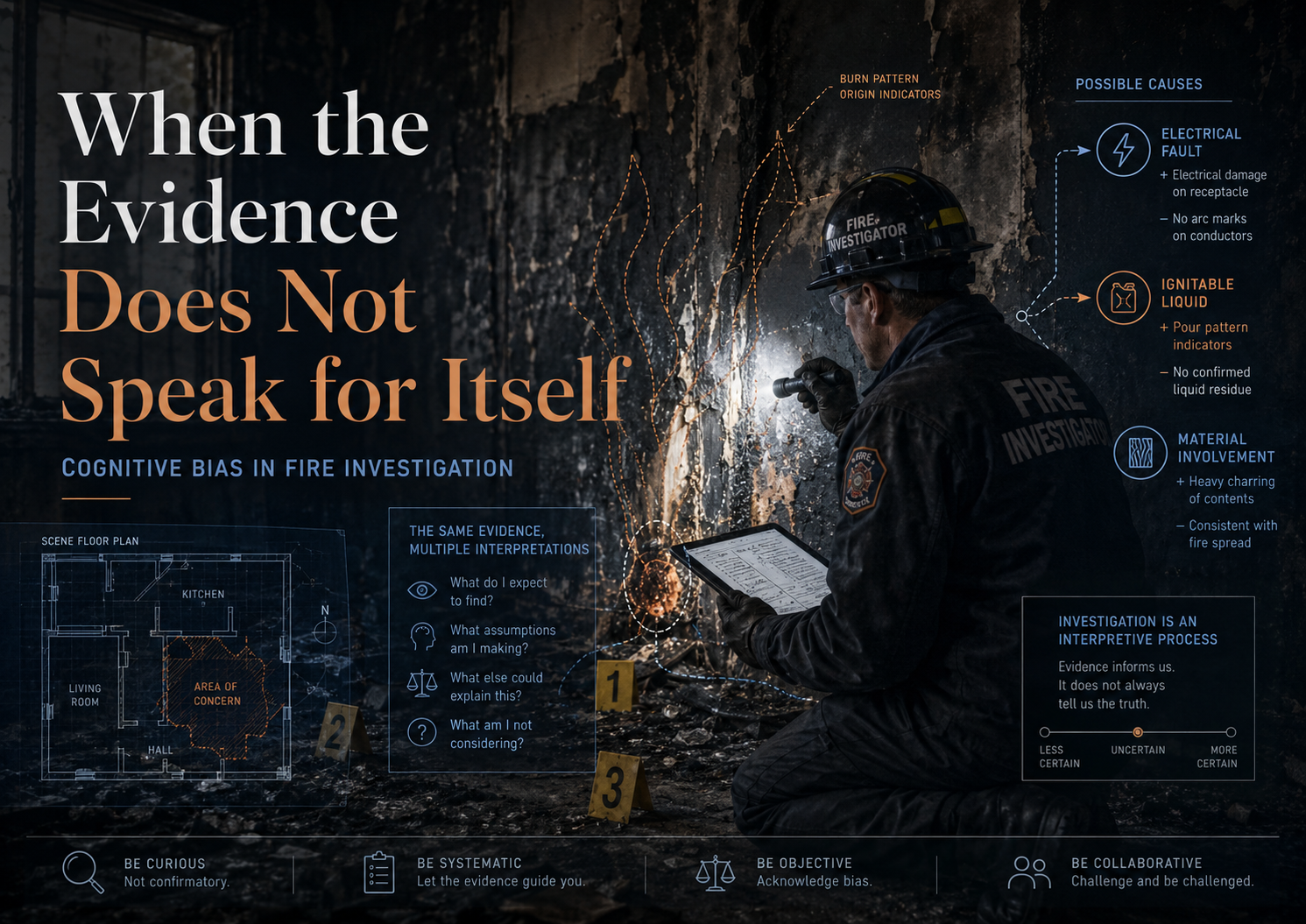
The article, When the Question Shapes the Answer, draws on the paper Burning Biases: Mitigating Cognitive Biases in Fire Engineering by Michael J. Kinsey, Max Kinateder, Steven M. V. Gwynne and Danny Hopkin.
It considers three potential influences on professional judgement:
- code authority bias
- experience or research bias
- fire safety confirmation bias
The central argument is not that codes, expertise or established knowledge should carry less weight. It is that their relevance depends on the question being asked.
A classification can describe how a product or assembly performed under stated test conditions. A model can estimate behaviour within selected scenarios and assumptions. Professional experience can help an engineer identify mechanisms and risks that others may overlook.
However, each may still provide a technically sound answer to a question that is narrower than the decision requires.
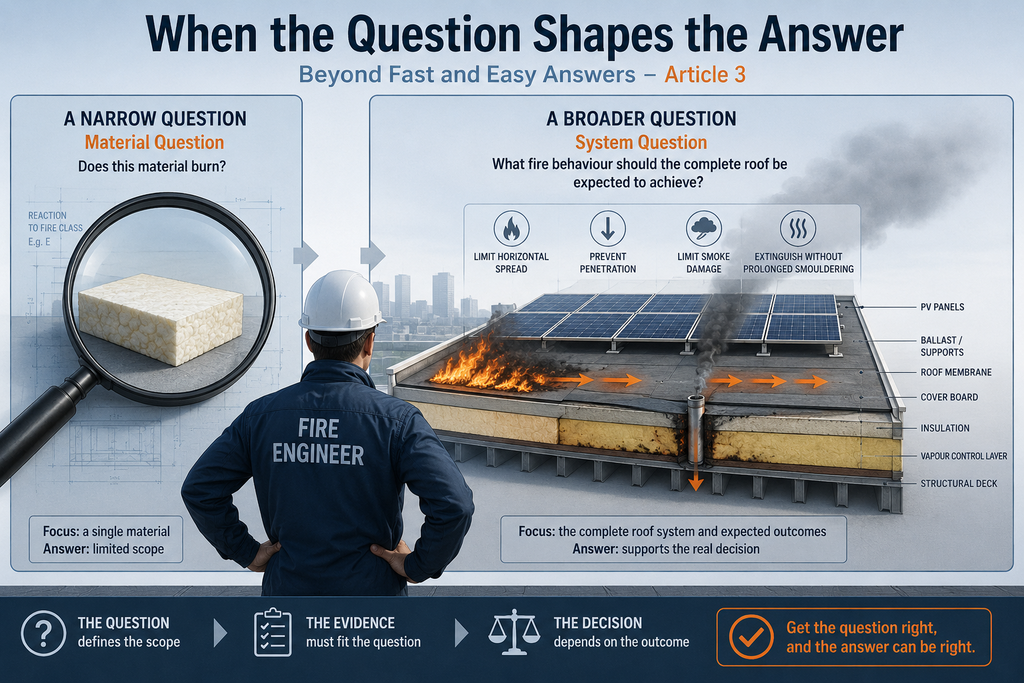
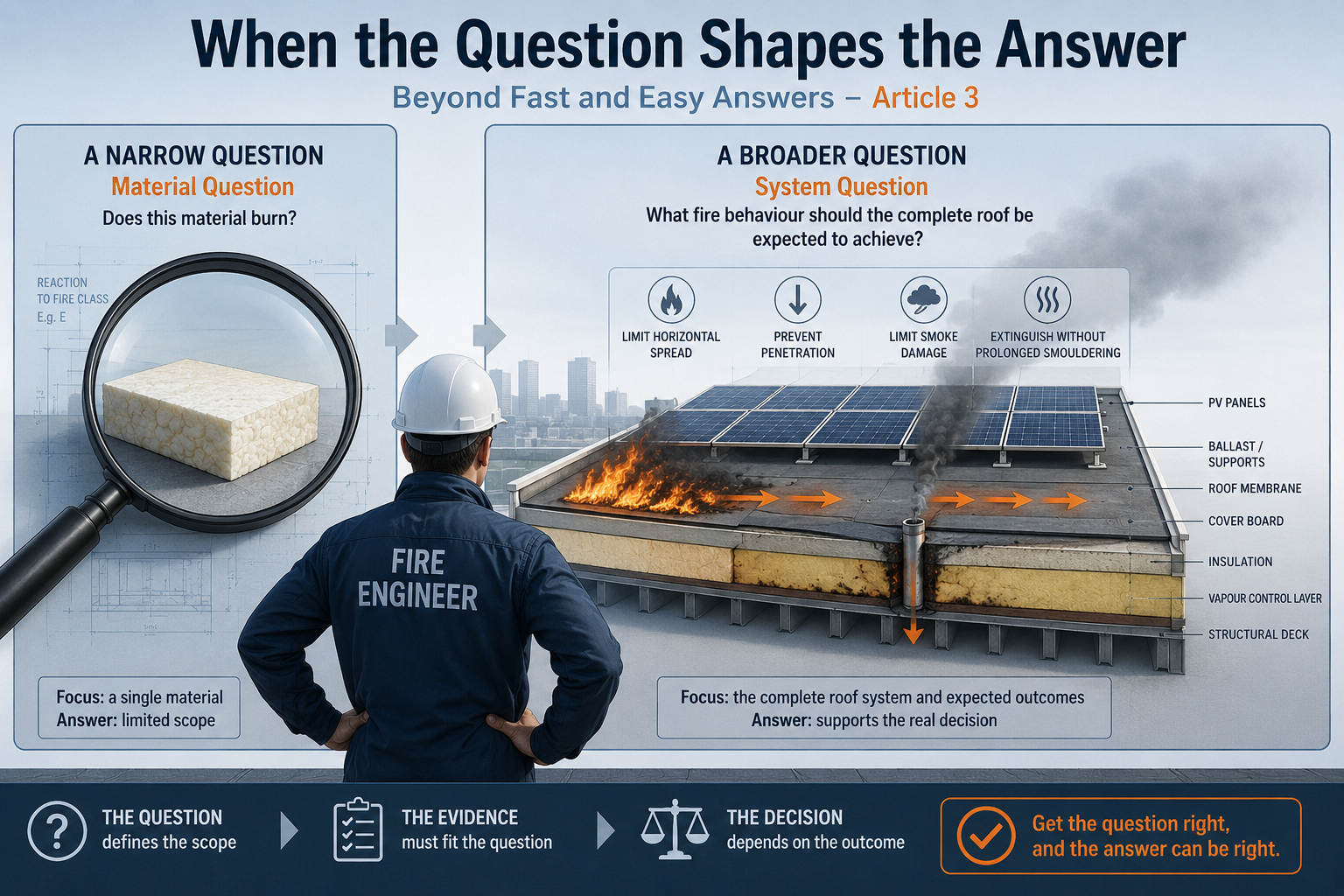
This distinction has become particularly relevant in discussions about photovoltaic panels on flat roofs. A debate may begin by asking which insulation material requires a protective layer. That is a legitimate technical question.
A broader question is what fire behaviour the complete roof system should be required to achieve.
For example:
- Should fire remain close to the point of ignition?
- How much horizontal spread is acceptable?
- Must the system prevent penetration into the building?
- Should it extinguish without prolonged smouldering or re-ignition?
These questions define expected system performance before a material or technical route is selected.
The article also returns briefly to the distinction between inputs, outputs, outcomes and impacts. Materials and protective measures are inputs. Test results and classifications are outputs. Limited fire spread and prevented penetration are outcomes. Protection of people, property and operations represents the wider impact.
Confusion can arise when an input or output is treated as though it answers the outcome question by itself.
The article does not propose a new fire-safety framework. Instead, it explains why clear performance questions are needed before engineers, regulators, researchers and industry begin comparing technical solutions.
As Chresten Heide-Anderson writes:
“Ask a narrow enough question and you can get a technically correct answer that still misses the decision.”
The full article is available in the Beyond Fast and Easy Answers newsletter.
Read: When the Question Shapes the Answer