Customizing Blog Settings and Live Preview

Tailor your blog's appearance with a variety of settings, including layout adjustments, font choices, and visual customizations. Instantly preview your changes to see how they'll look before going live.

On-Site EPS Densification at Amager Ressourcecenter

At the Amager Ressourcecenter (ARC) in Copenhagen, Expanded Polystyrene (EPS) waste from residents and businesses no longer requires long-distance transport for processing. Instead, the material is compressed directly on-site — transforming a previously costly and low-density stream into a compact, market-ready resource. In 2019, ARC introduced a container-based densification unit equipped with a RUNI compactor

Silkeborg Demonstrates Scalable Recycling of EPS Packaging

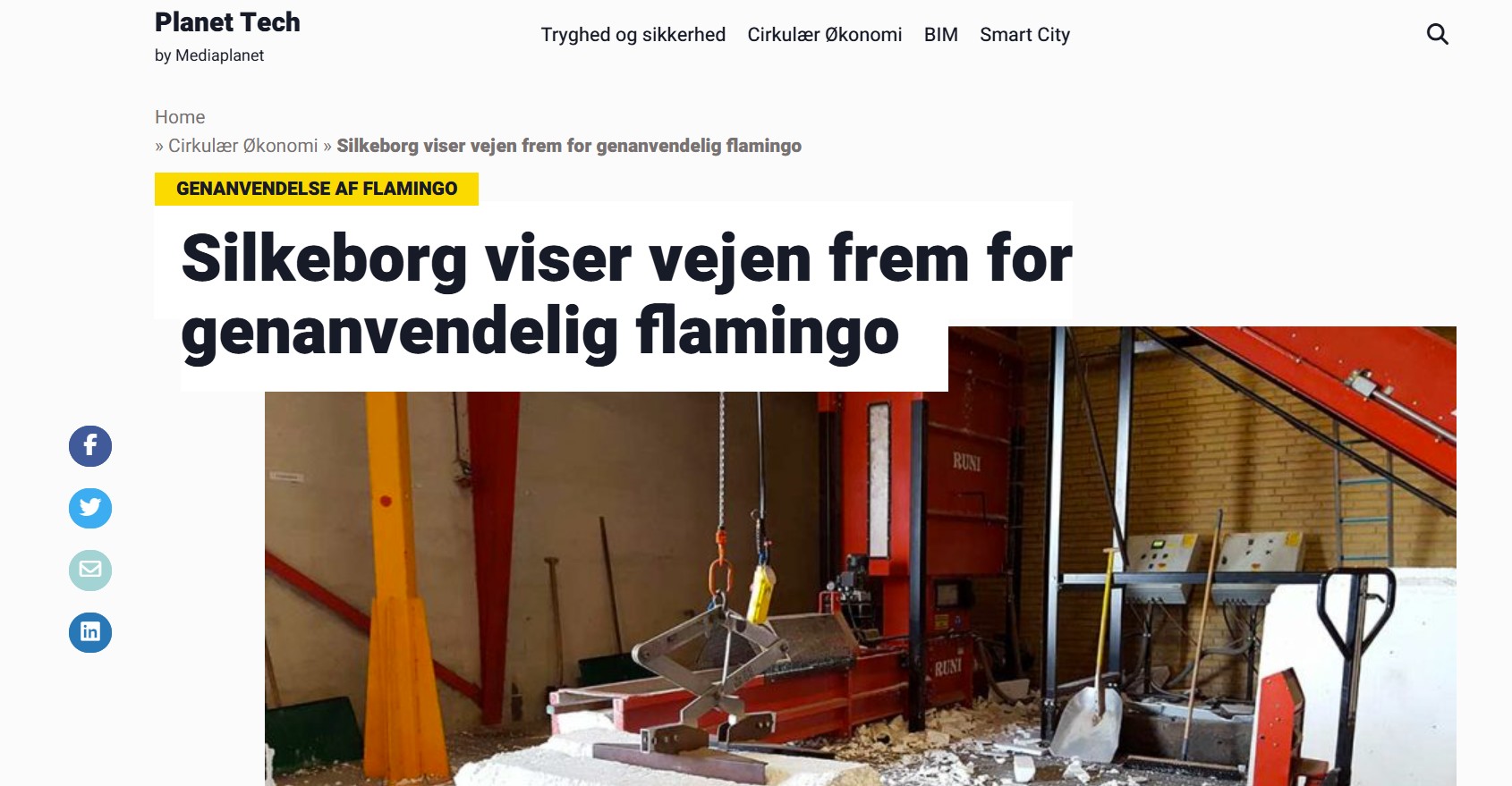
Silkeborg Forsyning, the municipal waste utility in Silkeborg, Denmark, began a dedicated program in 2012 to separate expanded polystyrene (EPS, commonly known as “flamingo”) from general plastic. The effort reached a crucial milestone when the utility installed a compaction facility to enable efficient recycling of clean white EPS from households and local businesses. Local separation

Sussex County pioneers EPS densification at landfill drop-off

In October 2016, Sussex County Municipal Utilities Authority (SCMUA) installed a self‑contained Foam Cycle densifier at its landfill drop-off center—becoming one of the earliest New Jersey counties to treat EPS as a resource instead of waste (waste360.com). Since then, the system has processed over 4,000 lb of clean packaging foam, significantly reducing landfill volume. The Foam Cycle unit

EPS Recycling in Practice: Canadian Provinces Demonstrate Functional Recovery Systems

Expanded polystyrene (EPS) is often misunderstood in public debate — seen as unrecyclable due to its low weight and high volume. But a detailed 2015 report from Divert Nova Scotia and Clean Foundation tells a different story. At the time of publication, several Canadian provinces had already established successful EPS collection and recycling systems: While

Danish Study Finds Environmental Gains from EPS Collection

A newly published study commissioned by the Danish Environmental Protection Agency has found that collecting and compacting expanded polystyrene (EPS) at municipal reuse stations may yield measurable environmental benefits compared to incineration. The study, carried out by Rambøll, compares two handling scenarios: incinerating EPS with residual waste, or collecting it separately for compaction and recycling.