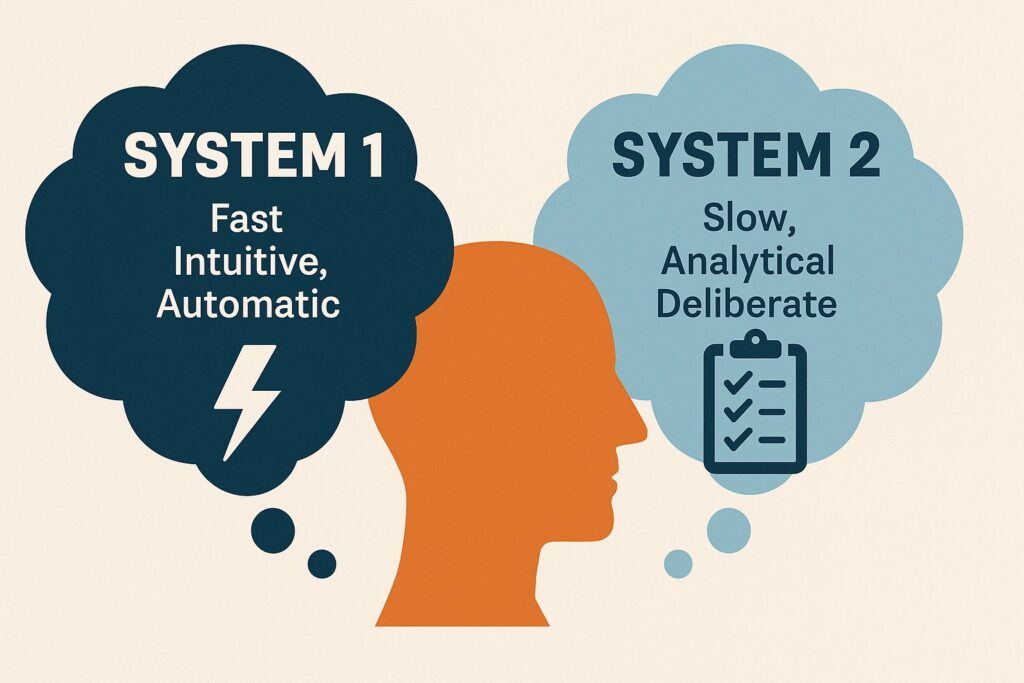
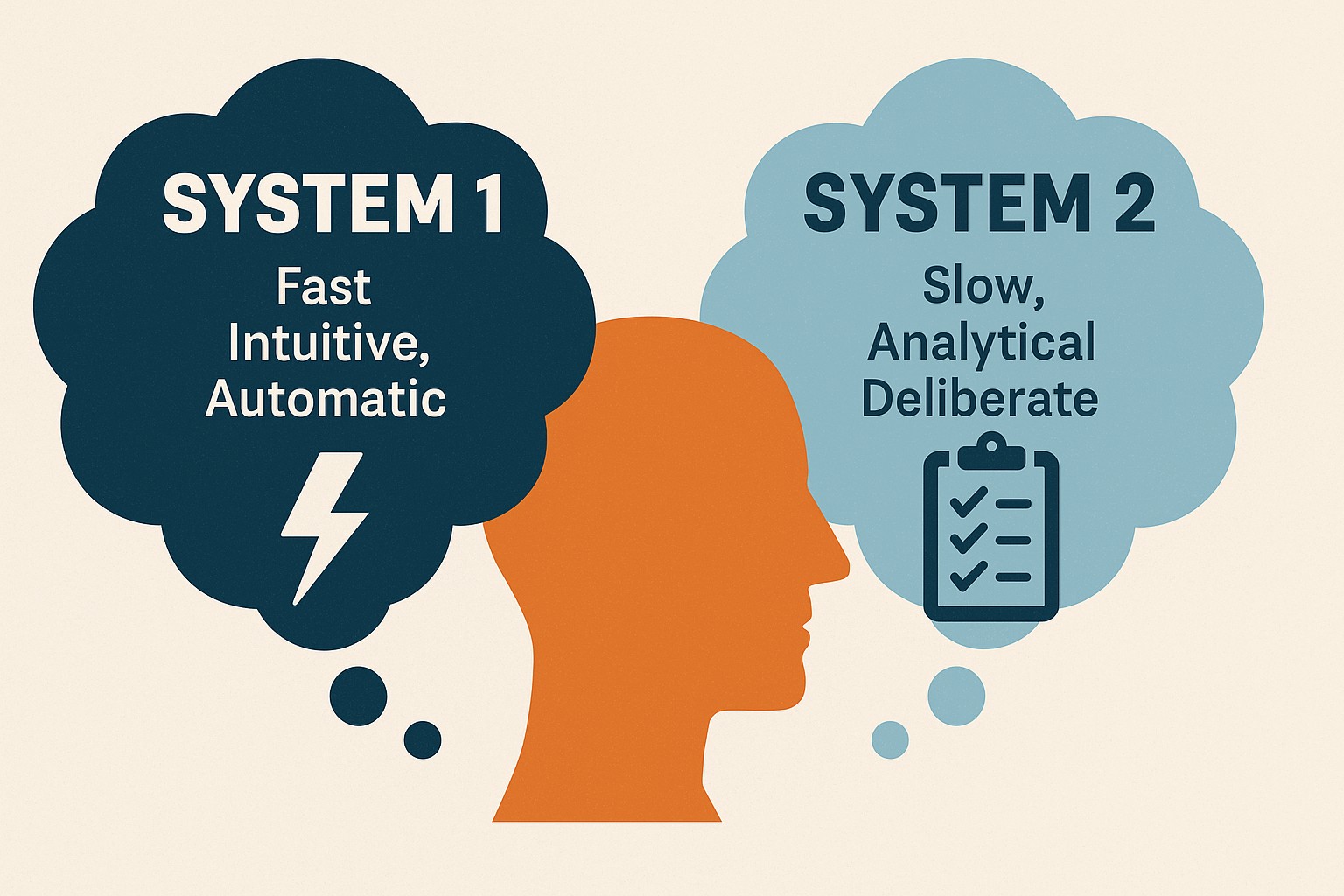
When making decisions, our brains rely on two complementary systems. Psychologists call them System 1 (fast, automatic, intuitive) and System 2 (slow, effortful, analytical). Both are essential. But when important choices are made too quickly, System 1 can lead us to draw misleading conclusions.
In a recent issue of his Beyond Fast and Easy Answers newsletter, NEPSA Director Chresten Heide-Anderson explored this topic through a review of Jerrell Forman’s book Cognitive Biases (link to Amazon). The book provides practical rules that help trigger System 2 thinking when it is most needed. These include:
- Sleep on important decisions rather than deciding when tired or stressed.
- Define what information you need before looking for it.
- Consider alternatives and ask what a skeptical colleague might say.
- Use simple rules and checklists to reduce ad-hoc choices.
- Document assumptions, since memory is rarely reliable.
To illustrate, the newsletter takes a recent Politico article on plastics as a case study. The article reported that plastics account for 3.4% of global greenhouse-gas emissions today, and that production is projected to triple by 2060. A quick System 1 conclusion would be that plastics will therefore account for over 10% of emissions by 2060.
But this reasoning is flawed. The share of plastics in total emissions depends on how other sectors change. If energy or transport decarbonize faster, plastics’ share could rise even if absolute emissions fall. Conversely, if other sectors grow equally, the share may remain flat. The article also combines climate impact (emissions) with leakage and litter (plastic waste to oceans). Both are urgent, but they are not the same problem and require different solutions.
Research underscores why System 2 thinking matters here. A 2018 study from Heriot-Watt University, quoted by the BBC, found that replacing plastics with alternatives could increase emissions. McKinsey reached similar conclusions in its 2022 report Climate impact of plastics.
The broader lesson is clear: problem solving requires thinking two steps ahead. That is something System 1 rarely does.
Read the full newsletter article here.