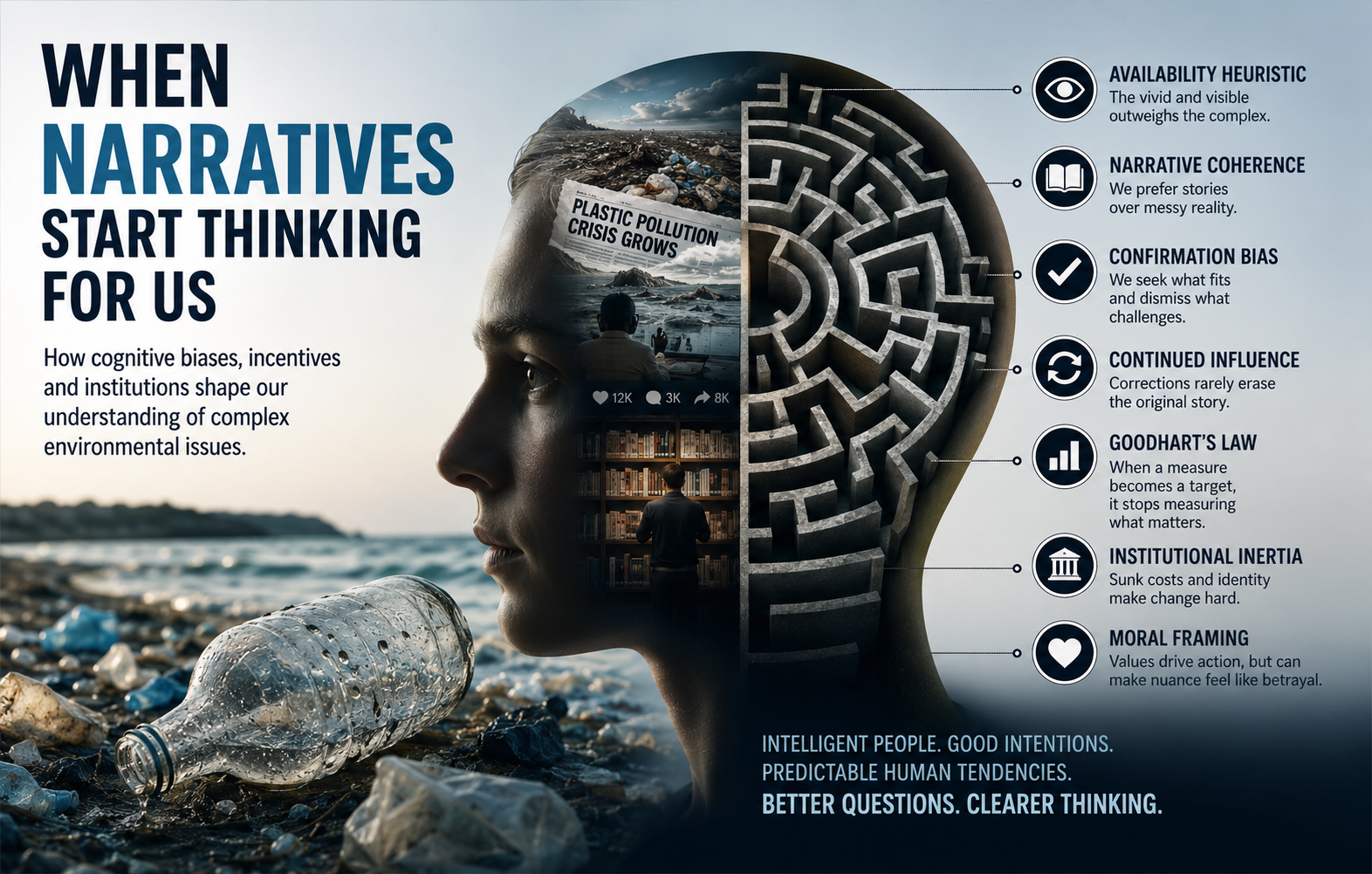
Public discourse around plastic waste is often driven more by perception than by fact. In a recent LinkedIn Insight, NEPSA Director Chresten Heide-Anderson explores how confirmation bias — the human tendency to seek out and remember information that aligns with our preconceptions — shapes environmental narratives and policy debates.
The article dissects a case in which a scientific claim about microplastics in human blood, later withdrawn, continued to influence media and public perception. It raises the critical question: Why do we remember the initial headline, but not the correction?
Chresten’s reflection is part of a broader series challenging fast and easy answers in sustainability debates, encouraging decision-makers to pause, probe, and reframe.
👉 Read the full reflection here:
Confirmation Bias and the Public’s Perception of Plastic Waste