How hidden EPS systems are scaling recovery behind the scenes
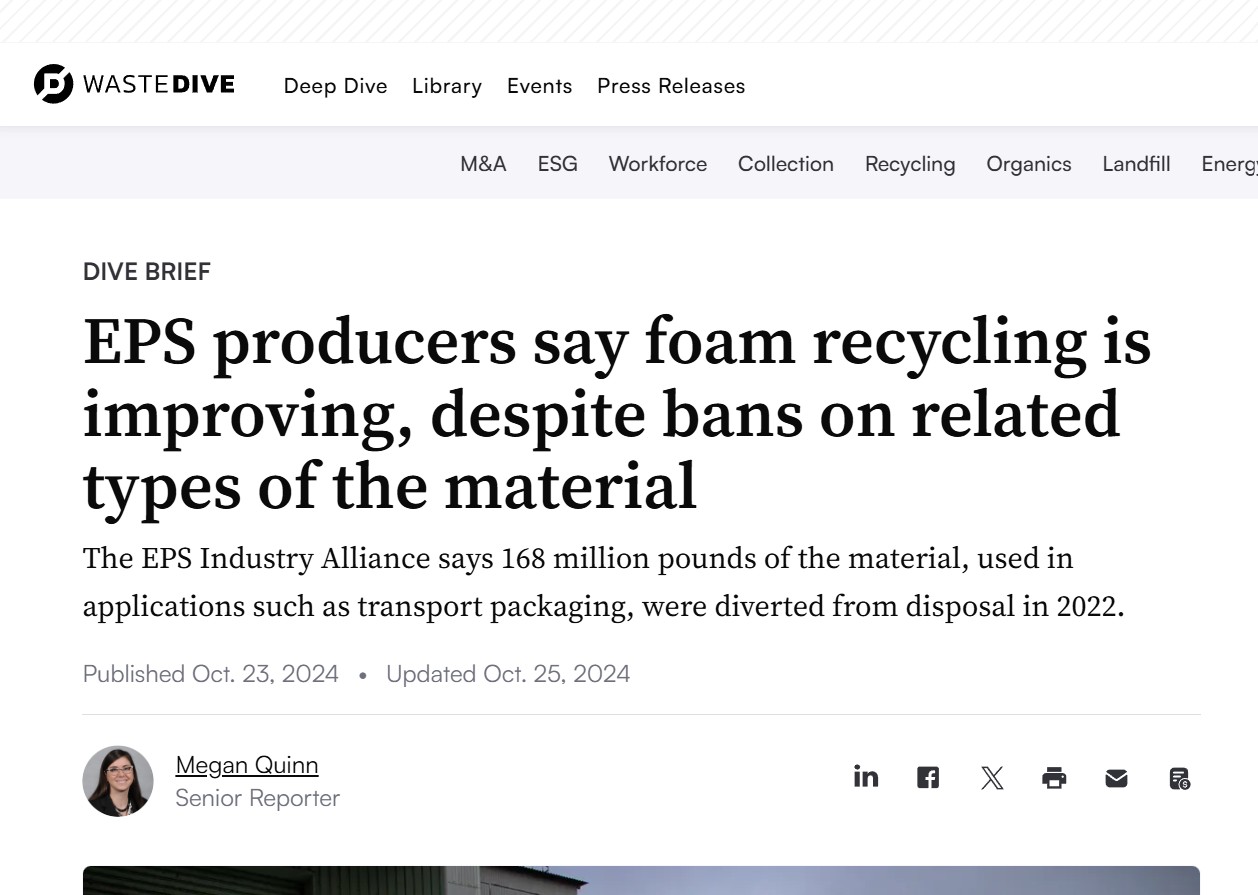
In 2022, North American recyclers diverted a record 168.6 million pounds of EPS transport and protective packaging from disposal—up from 136.8 million in 2019—achieving an estimated 31% recycling rate across the region (wastedive.com). Notably, 61 million pounds were sourced from post-consumer material, marking a significant expansion in household-generated stream recovery (Recycling Product News).
This progress has been accomplished not through visible curbside programs but via “behind-the-scenes” infrastructure—business-to-business collection, drop-off sites, and municipal grants—often supported by EPS-Industry Alliance and Foam Recycling Coalition initiatives (wastedive.com). EPS-IA reports over 400 drop-off locations now, with 60 added just last year (wastedive.com).
System logic: Data-driven infrastructure growth
- The Foam Recycling Coalition awarded grants to deploy densifiers and other equipment, doubling collection from 841,000 lbs in 2019 to 1.6 million lbs in 2023 (wastedive.com).
- EPS-IA members have invested approximately USD 185 million in recycled EPS-enabled resin technologies and infrastructure, with capacity for 79 million lbs today and plans exceeding 150 million lbs (wastedive.com).
- Recycled EPS (rEPS) is increasingly used for rigid packaging, insulation, automotive, and safety helmets—building demand for recovered feedstock (wastedive.com).
These results show that structured investment in processing and drop-off infrastructure, combined with clear data and strategic partnerships, enables substantial EPS recovery without relying on curbside programs.
Why this matters
This case highlights how EPS recycling scales by aligning infrastructure with actual material streams—business supply chains, industrial partners, and grant-funded densifiers—rather than public-facing solutions. By anchoring recovery in systems that already handle EPS volumes, the material is integrated into broader circular frameworks. As EPR schemes evolve in states like California and Oregon, these proven collection methodologies offer replicable models.