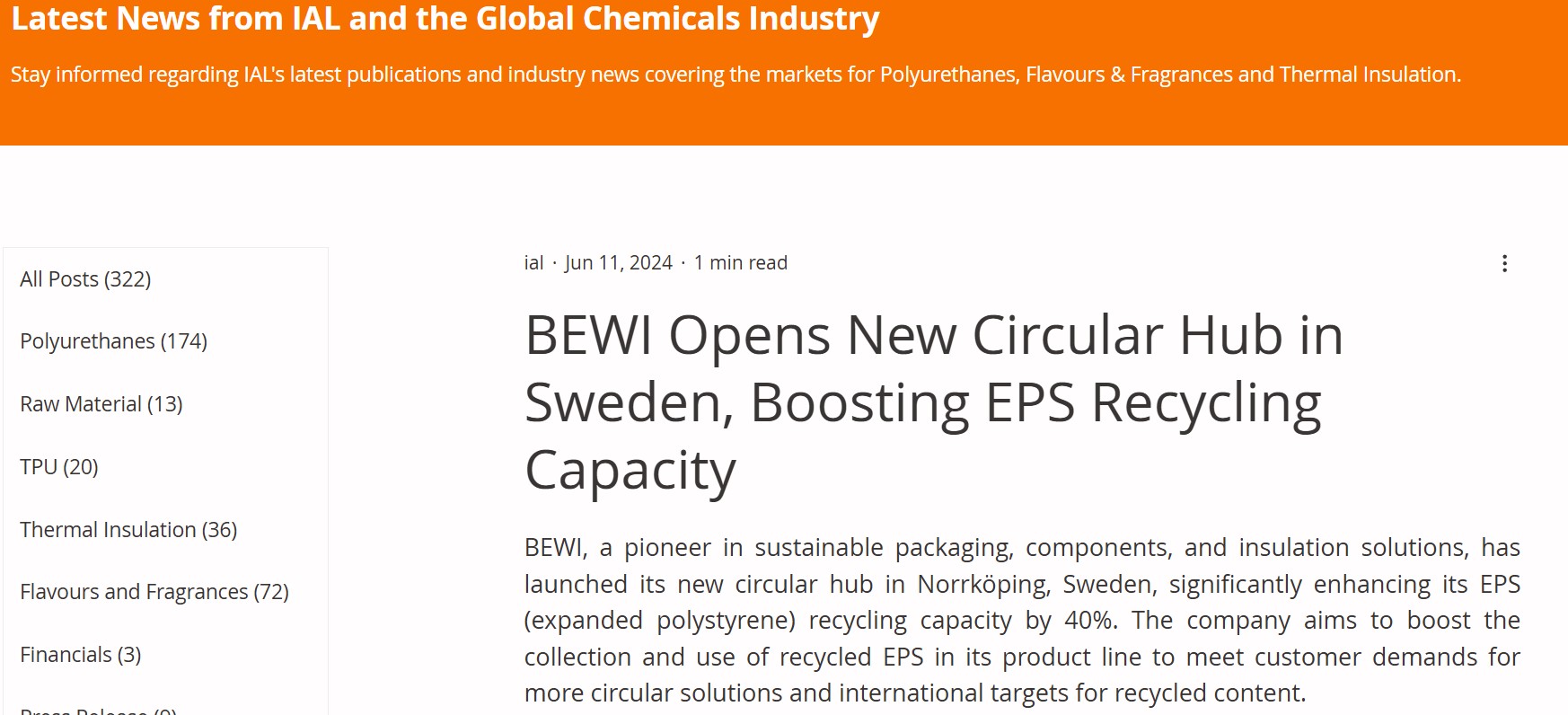
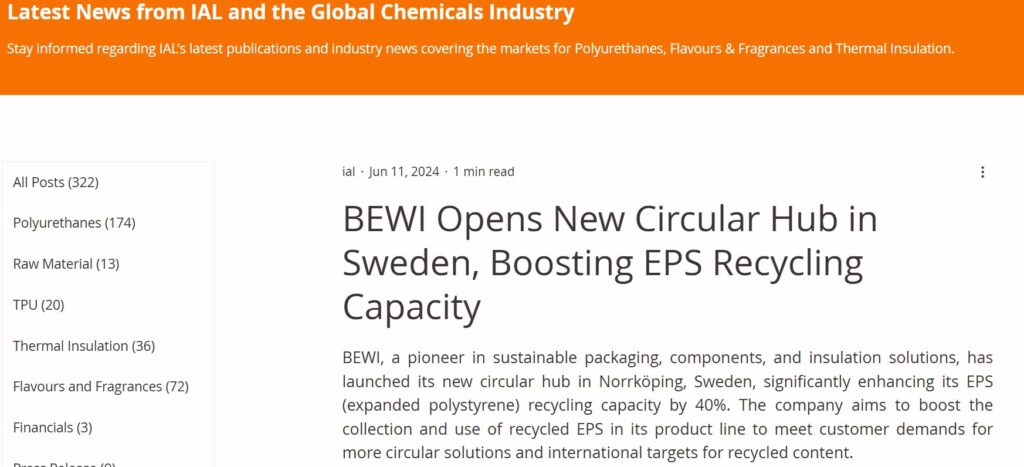
On 31 May 2024, BEWI ASA officially opened a new EPS recycling and extrusion hub in Norrköping, Sweden. The site, formerly an insulation factory, has been converted into a dedicated circular facility — purpose-built to handle large volumes of used expanded polystyrene (EPS) from the packaging and construction sectors.
The new hub increases BEWI’s total EPS recycling capacity by approximately 40%, establishing a permanent infrastructure node in Sweden’s material system for foam recovery. The facility is designed to operate at industrial scale, processing EPS waste from post-consumer and post-industrial sources into recycled raw material for new insulation panels, packaging, and other applications.
End-to-end material integration
EPS material entering the Norrköping hub comes from a mix of sources:
- Post-consumer fish boxes collected from coastal and logistics hubs
- Construction site EPS offcuts
- Secondary waste streams from municipalities and partner programs
Once delivered, the EPS is shredded, compacted, and extruded into high-quality recycled polystyrene. The output is used both internally by BEWI (for new EPS production) and sold to downstream customers. The process uses energy-efficient extrusion lines and benefits from the site’s previous setup as a manufacturing facility, allowing for relatively rapid deployment of new equipment.
This system closes the loop between material origin, recovery, and reuse, making BEWI’s Norrköping hub one of the most integrated EPS circular sites in Europe.
From policy to practice: scaling circularity
In 2023 alone, BEWI collected around 27,000 tonnes of EPS waste, recovering approximately 90% of the fish boxes it had placed on the market. That volume now feeds directly into circular operations like Norrköping, helping transform what was once linear packaging into a recoverable feedstock.
The hub serves as a national consolidation point, with transport routes connecting to other BEWI recovery sites and a major EPS extruder in the Netherlands. This structure enables cross-border circular flows — from Sweden to continental reuse — supported by logistics and existing trade pathways.
Importantly, the system aligns with the UNEP-recognised recyclability of EPS transport packaging, giving international validation to the underlying model. The Norrköping case is not a test — it is operational circularity with verifiable volumes, technology, and strategic infrastructure.
FACT BOX
| Item | Detail |
| Inauguration date | 31 May 2024 |
| Facility type | Circular hub – EPS recycling and extrusion |
| Location | Norrköping, Sweden |
| Added capacity | +40% EPS processing volume |
| Annual EPS recovered | ~27,000 tonnes (≈90% of fish boxes placed on market) |
| Input streams | Post-consumer packaging, construction EPS, logistics EPS |
| Output | Recycled polystyrene for insulation, packaging, and resale |
| End use integration | BEWI downstream plants and external customers |
| System model | National node with EU-linked extrusion capacity |
| Validation | Aligns with UNEP recognition of EPS transport packaging recyclability |
📎 Sources:
- “BEWI opens circular hub in Norrköping” — BEWI ASA, 31 May 2024
- Live.Euronext.com company announcement
- https://bewi.com
- LinkedIn post by BEWI (31 May 2024)
- We Are Aquaculture, industry editorial summary