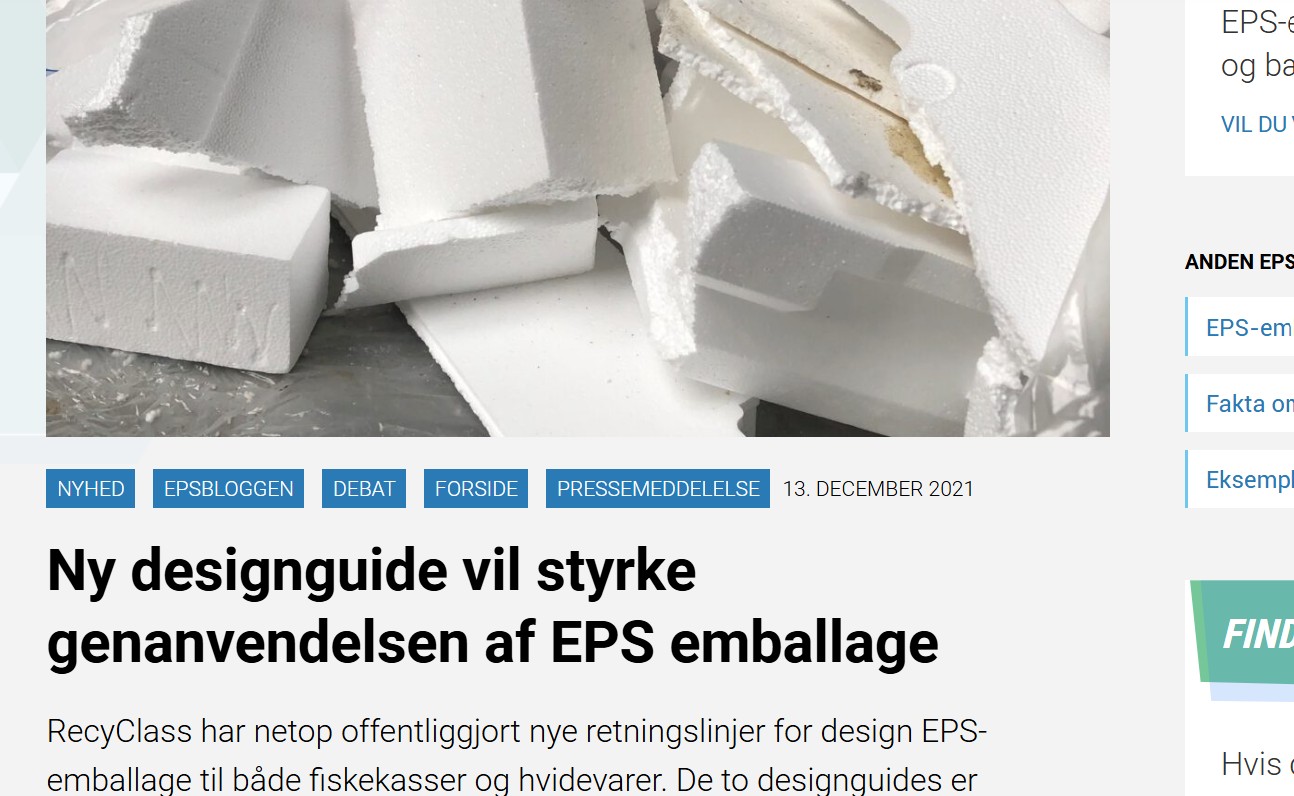
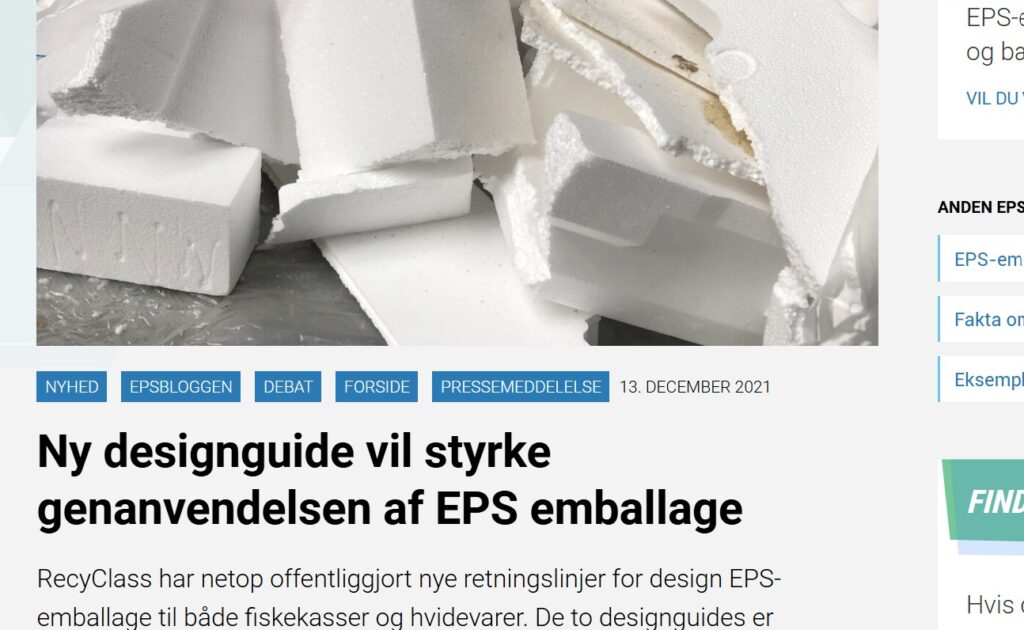
EPS‑branchen, the Danish EPS industry association, has published a new design guideline to strengthen the recyclability of EPS packaging—complementing the broader European initiative RecyClass. The guide features practical recommendations for manufacturers of EPS fish boxes and white-goods packaging, aiming to support clean sorting and efficient material recovery.
Guideline Essentials
The design guide urges producers to prioritise:
- Monomaterial structures that avoid blends or hard-to-separate inserts
- Clean design, free from contaminants like labels, additives, or adhesives that complicate recycling
- Clear labelling to indicate recyclability and guide sorting at municipal and industrial sites
- Integration of structural components (e.g., handles) designed to separate easily or be made from EPS-compatible materials (eps-airpop.dk, eps-airpop.dk)
By following these best practices, EPS packaging becomes better aligned with sorting systems and clean recycling streams.
System Benefits
- Improved sorting efficiency: Uniform, labelling-compatible packaging helps municipal and commercial sorting, reducing waste stream contamination.
- Enhanced quality of recyclate: Cleaner feedstock boosts yield and allows more applications for recycled EPS.
- Industry alignment: Coordinated guidelines across fish-box and white-goods segments promote consistency across supply chains, aiding compliance and scaling.
RecyClass-led criteria ensure that new EPS packaging adheres to European recyclability standards, reinforcing EPS’s position in a circular plastics economy. By reducing design-related barriers, packaging becomes more compatible with existing recycling infrastructure.
Strategic Relevance
Effective packaging design is the foundation for functional recycling systems. Light, bulky materials like EPS are particularly sensitive to contamination and density issues. A targeted design guide helps mitigate these barriers by influencing upstream decisions.
As EPS packaging traverses municipal collection points and recycling facilities, standardised design helps maintain material quality and traceability—enabling consistent recovery rates and supporting closed-loop material flows.
The initiative also reflects sector responsibility: by aligning product design with recyclability, upstream actors strengthen downstream system effectiveness and reduce risk of material loss.
Conclusion
The EPS‑branchen and RecyClass design guide represents a proactive step in ensuring EPS packaging aligns with recycling systems from production to end-of-life. By prescribing clean, monomaterial, and labelled designs, the guide helps eliminate design-induced recycling challenges. It encourages higher-quality feedstock, more efficient sorting, and reinforced circular practices—ultimately strengthening EPS’s role in sustainable material systems.
Source: “Ny designguide vil styrke genanvendelsen af EPS emballage,” EPS‑Airpop, 13 December 2021 (eps-airpop.dk)