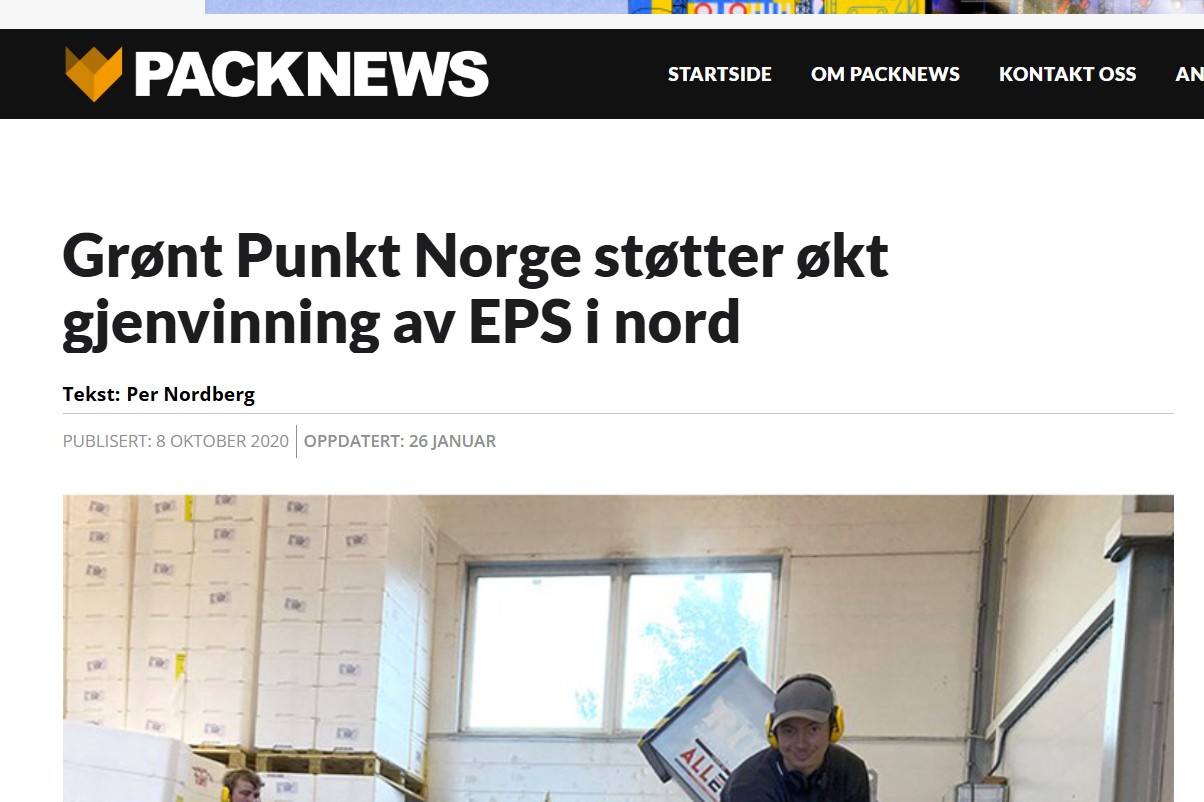
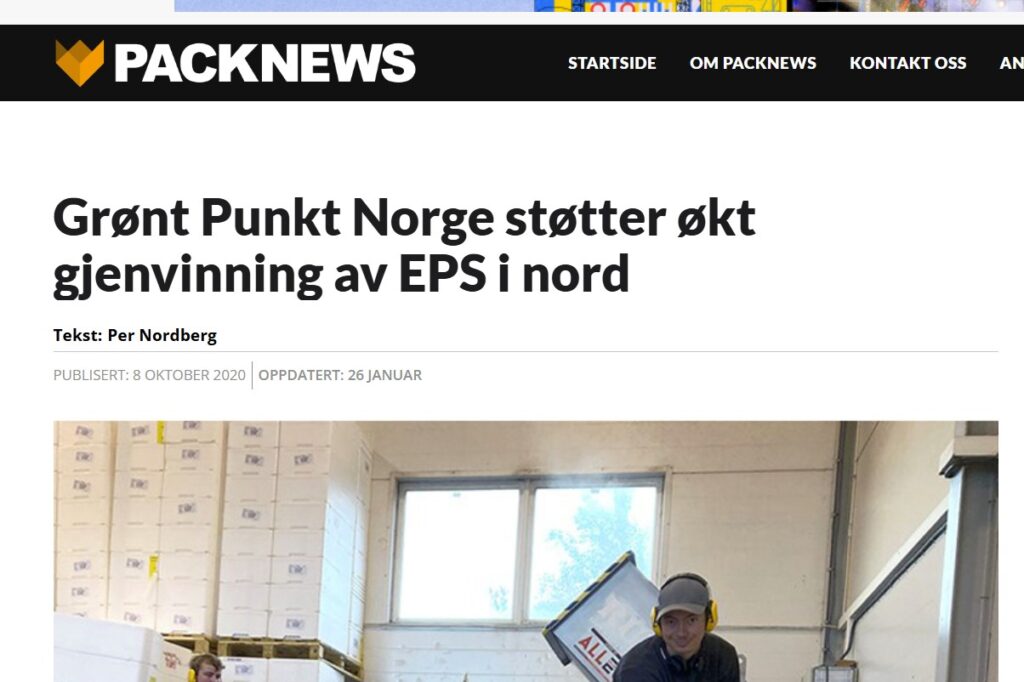
A new step toward circular EPS emerges from Northern Norway. Vestvågøy Asvo—a social enterprise offering meaningful work opportunities—has begun compressing EPS foam using funding from Grønt Punkt Norge. The initiative strengthens local recycling capacity and expands collection beyond urban centers to include communities and businesses in the region.
Introducing a Local Compression Hub
Vestvågøy Asvo, established in 1993, collects EPS packaging from seafood company Insula via regular truck loads. They also build subscription-based collections with electronics retailers such as Elkjøp, Bohus, and Power. Private individuals can drop off clean EPS at no cost .
Previously relying on aging equipment, they received support from Grønt Punkt Norge to purchase a modern EPS press. The new equipment significantly improves material throughput by compressing foam—up to 98 % compressed volume—making storage and transport far more efficient (Grønt Punkt Norge).
Municipal collaboration is planned with Lofoten Avfallsselskap to introduce EPS source-separation at local waste facilities. EPS from construction and developer sites is also being evaluated for collection through the press.
System Overview
- Collection: EPS sourced from businesses and households across Vestvågøy
- Compression: New press at Asvo densifies material, reducing space and transport costs
- Sale/Recycling: Compressed blocks are sold for reuse in industrial recycling streams
- Support: Grønt Punkt Norge funds densifier equipment to promote regional EPS recycling
Strategic Significance
This project shows that even remote areas can establish circular EPS systems through targeted infrastructure investment. By compressing EPS locally, Vestvågøy Asvo minimizes transport inefficiencies and opens the door for dependable material flows, even where volumes are modest.
The social enterprise dimension adds a valuable layer: providing work and inclusion for people outside the traditional labor market. When combined with municipal source-separation, this demonstrates a scalable model for rural and regional EPS recovery.
Grønt Punkt Norge’s equipment support aligns with similar past initiatives in Bergen, Hamar, and Rygge—confirming a coordinated approach to build national coverage (Grønt Punkt Norge, Packnews.no).
Conclusion
The EPS recycling initiative in Vestvågøy illustrates how social enterprises, municipal systems, and producer responsibility schemes like Grønt Punkt Norge can co-operate to build local circular economies. It reinforces infrastructure, reduces emissions, and promotes inclusion.
Source: “Grønt Punkt Norge støtter økt gjenvinning av EPS i nord,” Packnews.no, 8 October 2020 — Grønt Punkt Norge (Packnews.no)